
Travelers to Freedom: Methodology
Published:
This post explains the methodological challenges of the project and details my data organization.
Introduction
Representing the geographic journeys of freedom seekers means confronting the challenge of researching a secret. There are sources from some Underground Railroad participants; for this project, I relied on the records of Sydney Howard Gay and William Still, pivotal members of the anti-slavery networks in New York City and Philadelphia, respectively.[1]
Sources
The most well-known contemporary documentation of the Underground Railroad comes from William Still. As the secretary and chairman of the Pennsylvania Vigilance Committee, Still received almost 1,000 freedom seekers between 1853 and 1861, recording information about each traveller.
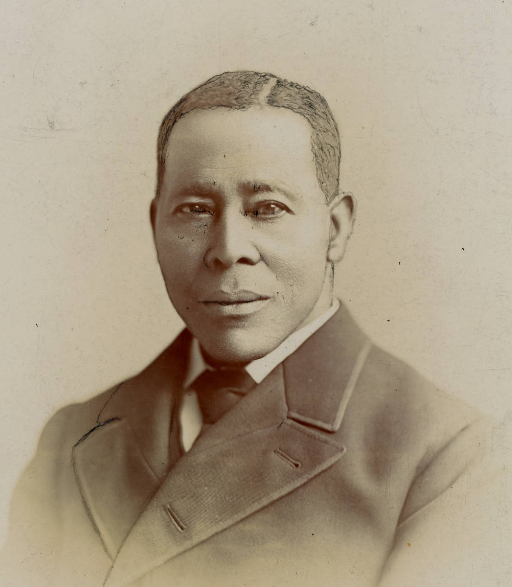
Through the combined efforts of scholars James McGowan, William C. Kashatus, Nick Sacco, and Jeremy Mennis, Still’s records of freedom seekers are available as a geocoded database. In this dataset, each data entry row represents one person; the geographic information refers to the place from which they escaped.[3]
While this information is useful and interesting, it is more a representation of freedom seeker origins than movement. This is likely due, at least in part, to source availability. Most of Still’s records are available in his book, The Underground Rail Road, which he published in 1872—almost 20 years after he began his work with the Vigilance Committee. Clearly, Still had both impressive record-keeping discipline and an impressive memory—his book is nearly 800 pages—but there are places where he omits information due to lack of source material (helpfully, he straightforwardly announces these cases in the text of his book). The details of freedom seeker narratives are sometimes vague, particularly geographic information.
In New York City, Sydney Howard Gay fulfilled a similar role as William Still did in Philadelphia. Gay edited the National Anti-Slavery Standard newspaper and served as a corresponding officer for the American Anti-Slavery Society.[5]
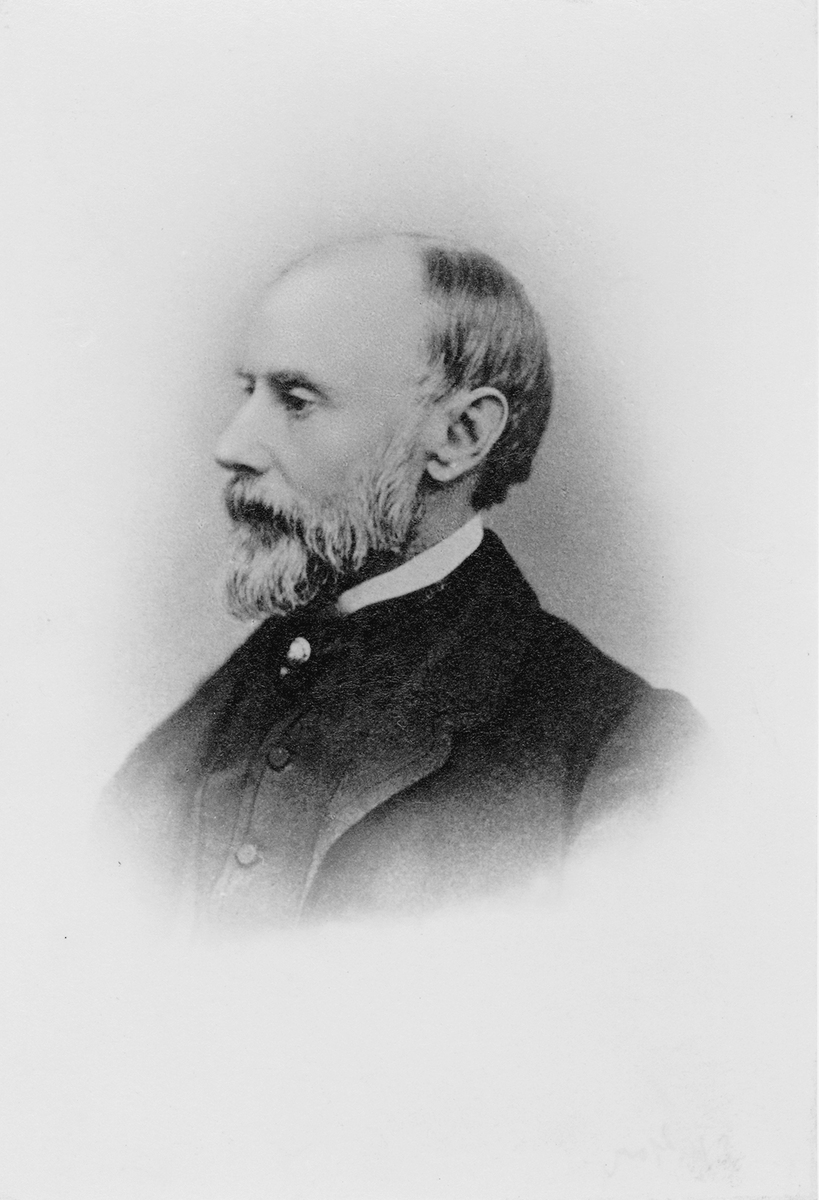
Like Still, Gay kept meticulous records of the freedom seekers who passed through his office (available in photograph and transcript form from the Columbia University library). Unlike Still, however, Gay never wrote a book, and the details included in his records are often sparser but more clear. The two men also had different record-keeping approaches; Still tended to record more personal details (age, appearance, occupation, literacy), while Gay recorded more details about freedom seekers’ travels. Gay’s records are the basis for this project, with Still’s book and other sources often serving as a supplement.[7]
The goal of this project is to turn Gay’s records into a geodatabase that visualizes the movement of freedom seekers. The database, at this point, is unfinished. Gay recorded hundreds of stories, and I anticipate that full data analysis will be a multi-year project. Even without a complete dataset, however, some interesting trends emerge, which I explore in the conclusions post. The rest of this post covers database construction and organization.
Method and data organization
This database records each known location of each freedom seeker that appears in Gay’s records as a data point. Rather than having each row of data correspond to one person, each row corresponds to one stage of their journey. For example, a hypothetical freedom seeker who escaped from Baltimore, stopped in Wilmington, Philadelphia, New York, Syracuse, and Rochester, and ended up in Toronto, would appear in seven rows of data. Where possible, I have included times and dates of arrivals and departures and transportation information. I have also included the individuals who assisted freedom seekers on their journeys.
I entered the data into an Excel spreadsheet with three primary sheets:
- Places: a sourced list, with geodata, of places that commonly appear. For example, because every freedom seeker in Gay’s records stops in his office at least once, I included Gay’s office as a listing in the “Places” sheet rather than including the same citation for his office location in the “Source” field for every data point where a freedom seeker stops there.
- People: a list of demographic data about every freedom seeker in Gay’s records. With minimal changes, I have followed the format that Jeremy Mennis uses to organize the same type of information from William Still’s records.[8]
- Movements: a list of every identifiable geographic location where freedom seekers in Gay’s records stopped.
The “Movements” sheet is the most significant to the project, and requires the most explanation. For each stop on a freedom seeker’s journey, I have recorded data (if available) for the following fields:
| Field | Description |
|---|---|
| ESCAPE | Identifies the journey partially described in the data row. Hyphenated labels indicate multiple travelers with different last names (ie, "Lewis-Banks"). Single travelers are labeled with their last and first names (ie, "Hill, Simon"). If applicable, family relationships are noted with the appropriate hyphenated or non-hyphenated format (ie, "Johnson family" and "Brown brothers" for related travelers with a single last name, "Cummens-Moody family" for related travelers with differing last names). |
| LAST_NAME | Identifies listees' surnames. |
| FIRST_NAME | Identifies listees' first names. |
| UNIDENTIFIED | Indicates whether listees were anonymous to Sydney Howard Gay, William Still, and/or freedom seekers. Y = Yes; N = No. |
| STATUS | Indicates whether listees were freedom seekers or people who offered assistance to freedom seekers. FS = Freedom seeker; A = Assistance/anti-slavery. |
| RACE | Indicates the race of listees, if known. B = Black; W = White; U = Unknown. |
| LOCATION | Identifies the location at which a stop takes place. Labels are as specific as possible. Residential locations are identified by the name of the homeowner/primary resident (ie, "Rev. Jermain Loguen"); locations of businesses, society offices, and newspaper offices are identified by the name of the business, society, or newspaper (ie, "Bloodgood's Hotel," "Pennsylvania Vigilance Committee," "True Wesleyan Office"); infrastuctural or geographic features and civil buildings are labeled with their title (ie, "Christiana River Landing," "Broad Street Pier," "US District Court," "10th Street, Philadelphia"); directional estimates are labeled as Gay noted them (ie, "20 miles above Baltimore, MD"); geographic regions are labeled with their titles (ie, "Baltimore, MD," "Appomattox County, VA"). Locations where freedom seekers were enslaved by unnamed enslavers in unnamed locations are labeled sequentially (ie, "First enslaver," "Second enslaver," etc). |
| ADDRESS | Identifies the modern street address, if known, for the location at which a stop takes place. |
| LATITUDE | Identifies the latitude where a stop takes place. |
| LONGITUDE | Identifies the longitude where a stop takes place. |
| CITY | Identifies the town or city where a stop takes place, if known. |
| COUNTY | Identifies the county where a stop takes place, if known and applicable. This field is blank for large cities which are their own county or contain multiple counties. |
| STATE | Identifies the state where a stop takes place. |
| LOCATION_TYPE | Identifies locations as either enslavement, a stop on the Underground Railroad, a travel stop, or a destination. |
| LOCATION_NUMBER | Identifies the number of location when considering each stop location of an individual freedom seeker chronologically (ie, this field will contain "1" for a freedom seeker's first known location). |
| ARRIVAL_DATE | Identifies the date on which a freedom seeker arrived at the location. |
| ARRIVAL_TIME | Identifies the time (ie, "9:00am") or relative time description (ie, "early in the morning") at which a freedom seeker arrived at the location. |
| DEPARTURE_DATE | Identifies the date on which a freedom seeker departed the location. |
| DEPARTURE_TIME | Identifies the time (ie, "9:00am") or relative time description (ie, "early in the morning") at which a freedom seeker departed the location. |
| ARRIVAL_TRANSPORTATION_CATEGORY | Indicates the general method of transportation by which a freedom seeker arrived to the location. |
| ARRIVAL_TRANSPORTATION | Indicates the general method of transportation by which a freedom seeker arrived to the location, with a more specific transportation type indicated where applicable (ie, "Ship (Schooner)"). |
| DEPARTURE_TRANSPORTATION_CATEGORY | Indicates the general method of transportation by which a freedom seeker departed the location. |
| DEPARTURE_TRANSPORTATION | Indicates the general method of transportation by which a freedom seeker departed the location, with a more specific transportation type indicated where applicable (ie, "Ship (Schooner)"). |
| ESCORTED | Indicates whether the freedom seeker was escorted to the location. None = no escort; Anonymous = escort from person(s) unknown to Gay and/or Still or person whose name they choose to omit (this includes persons whose names are reported by freedom seekers but who were unknown to Gay and Still); Agent = escort from an abolitionist known to Gay and/or Still. |
| ESCORTED_BY | Indicates who escorted the freedom seeker to the location. |
| SENT | Indicates whether the freedom seeker was sent or directed to the location. None = no sending/direction; Anonymous = sending/direction from person(s) unknown to Gay and/or Still or person whose name they choose to omit (this includes persons whose names are reported by freedom seekers but who were unknown to Gay and Still); Agent = sending/direction from an abolitionist known to Gay and/or Still. |
| SENT_BY | Indicates who sent or provided directions to the location. |
| SENT_TO | Indicates to whom at the location the freedom seeker was sent/directed to. |
| SOURCE | Contains citations for the information communicated in the other fields. |
| NOTES | Contains clarification or elaboration on the contents of other fields. |
Estimates and approximations
Unfortunately, like many historical sources, Gay’s records can’t always offer exactness that allows us to pinpoint the exact location that he references. Without modern GPS (and, in the case of many freedom seekers, literacy), nineteenth-century travelers themselves didn’t always know where they were. I have kept the data entry as consistent as possible, despite some challenges in the following categories:
Location
The geographic data is formatted as longitude and latitude. This was fairly easy for locations for which I could find a contemporary address, since most mapping softwares (I used a combination of ArcGIS and Google Maps) provide coordinates as well as addresses. For exact addresses (for example, the National Anti-Slavery Standard office at 138 Nassau St, New York, NY 10038), I included four digits after the decimal in the longitude and latitude coordinates. For locations that correspond to a small region rather than a single address (for example, “Christiana River Landing,” “Broad Street Pier,” or “10th Street, Philadelphia”), I included three digits after the decimal. For large regions such as an entire town or city, I included two digits. I retrieved the longitude and latitude of large regions from Wikipedia’s Geohack program, which provides links to a variety of geographic information (you can view the GeoHack page for Richmond, Virginia, here as an example). This provided a more systematic way of choosing coordinates than pulling the longitude and latitude from a random point in the relevant town or city.
In some cases, Gay’s records include geographic references for which I provided no geodata. For example, in August 1855, freedom seeker Elizabeth Banks passed through both Still and Gay’s offices en route to Canada. She had escaped in approximately 1852 and lived in Pennsylvania in the intervening time; news that her former enslaver was searching for her prompted her to leave the country. In this case, I have included geographic coordinates for the location where Banks was enslaved (Easton, Maryland), and for her stops as she traveled north, but not for her residence in Pennsylvania. A set of coordinates for Pennsylvania as a whole would appear in the center of the state, which would be visually misleading without offering any substantial information about Banks’ whereabouts.[9]
Some geodata is highly speculative. In September 1855, Gay reported that brothers Anthony and Albert Brown, who escaped via sailboat, landed “20 miles above Baltimore, MD.” This record provides a reference, a relative distance, and a direction, which allows for an estimated set of geographic coordinates that is visually illustrative but inexact.[10]
I have avoided speculating about the more specific locations that Gay might be referring to when he recorded sending or receiving freedom seekers from towns or cities with known Underground Railroad participants unless other sources suggest a specific agent or address.
Time
Gay occasionally makes relative references to days rather than listing specific dates. For example, on Wednesday, October 3, Gay recorded that freedom seekers Sam Turner and Wesley Jones had departed Chestertown, Maryland “three weeks ago on Sat[urda]y.” This prompts a chronological question: since Wednesday, September 12, was exactly three weeks before Wednesday, October 3, is Gay referring to the Saturday before September 12 (Saturday, September 8) or the Saturday after (Saturday, September 15)? Although either is technically possible, I have chosen the closer date in this and similar cases; the database therefore indicates that Turner and Jones departed on September 15.[11]
I have avoided speculating on freedom seekers’ dates of departure from Still and Gay’s offices unless explicitly revealed, although it appears that the majority of travelers left the respective office and city on the same day that they arrived.
Conclusion
That is the (slightly dry) gist of how this project has come together. For the more interesting part—what all this data can tell us—see the conclusions post.
[1] Eric Foner, Gateway to Freedom: The Hidden History of America’s Fugitive Slaves (Oxford University Press, 2015), 9–12, 94–108; William Still, The Underground Rail Road (Porter & Coates, 1872).
[2] Joseph Husted et al., William Still Photograph, 1890, photograph, Ohio History Connection, Wilbur H. Siebert Underground Railroad Collection, https://ohiomemory.org/digital/collection/siebert/id/28600.
[3] Still, The Underground Rail Road; Jeremy Mennis, “Geospatial Dataset of Cities and Counties of Escape Origin as Recorded in William Still’s Records of the Underground Railroad, 1853-1861,” Journal of Slavery and Data Preservation 6, no. 4 (2025): 258–66, 10.14321/jsdp.6.4.0258; Jeremy Mennis, “Geospatial Dataset of Cities and Counties of Escape Origin as Recorded in William Still’s Records of the Underground Railroad, 1853-1861,” Harvard Dataverse, 2025, https://doi.org/10.7910/DVN/1BLSRL.
[4] Mennis, “Geospatial Dataset of Cities and Counties of Escape Origin as Recorded in William Still’s Records of the Underground Railroad, 1853-1861,” https://doi.org/10.7910/DVN/1BLSRL; view this map here.
[5] Foner, Gateway to Freedom, 94–108.
[6] Sydney Howard Gay Portrait, ca. 1850-1888, photograph, Massachusetts Historical Society, Portraits of American Abolitionists, Photo. Coll. 81, Massachusetts Historical Society Photo Archives, Columbia University Libraries Online Exhibitions, https://exhibitions.library.columbia.edu/exhibits/show/fugitives/item/9148.
[7] Eric Foner has undertaken the most thorough and illuminating study of Gay’s work, including an overview of the Record of Fugitives; Foner, Gateway to Freedom, 193-210.
[8] Mennis, “Geospatial Dataset of Cities and Counties of Escape Origin as Recorded in William Still’s Records of the Underground Railroad, 1853-1861,” https://doi.org/10.7910/DVN/1BLSRL.
[9] Sidney Howard Gay, Record of Fugitives, 1855-1856, Columbia University Rare Book & Manuscript Library, 9-10, https://exhibitions.library.columbia.edu/exhibits/show/fugitives/record_fugitives/book1/page9; Still, The Underground Rail Road, 291.
[10] Gay, Record of Fugitives, 9-10, https://exhibitions.library.columbia.edu/exhibits/show/fugitives/record_fugitives/book1/page12.
[11] Gay, Record of Fugitives, 14, https://exhibitions.library.columbia.edu/exhibits/show/fugitives/record_fugitives/book1/page14; in instances like this when days of the week are relevant, I have used this historical calendar toolto look them up.
